Wednesday, August 26, 2009

Wow!


Well, I don't have much time to make an extremely long post unfortunately. I am rather busy with orientation and taking care of a lot of things. However, in a week or so I should have a better sense of things and have more time to regularly update you on some of the many experiences I have gone through! This exchange program is so impressive! There are over 200 exchange students from 28 different countries. I have made friends with Germans, a girl from Kazakstan, Chinese, British, Koreans, Americans, French, and I can't remember the rest of the top of my head!

Just know that I will have many great posts to come, so be prepared followers! I just need to be focused on the important things I must take care of before the semester begins September 2nd. Look forward to keeping in touch with all of you!

Thursday, August 13, 2009

Racism

I found this article online and really got a lot out of reading it. I never really thought about how powerful whites were. I can really break the ice with racism with my actions towards those of color. This will be crucial with my relations to the Chinese because they may have negative views upon those of color. Hopefully I am able to show them that we are all equal and deserve to be respected and loved no matter what our skin color is. I recommend that you read the full article by clicking on "Martin Jacques", whom I have quoted on the next two paragraphs below. Martin lived in Hong Kong for 14 months with his Indian wife, who died in a hospital in Hong Kong. His wife's struggle with racism amongst the Chinese really ignited this man's passion for promoting peace amongst all peoples.

"Hong Kong, compared with China, is an open society, and has long been so, yet it has had little or no effect in mollifying Chinese prejudice towards people of darker skin. It is not that racism is immovable and intractable, but that its roots are deep, its prejudices as old as humanity itself. The origins of Chinese racism lie in the Middle Kingdom: the belief that the Chinese are superior to other races - with the exception of whites - is centuries, if not thousands of years, old. The disparaging attitude among American whites towards blacks has its roots in slavery. Wishing it wasn't true, denying it is true, will never change the reality. We can only understand - and tackle racism - if we are honest about it. And when it comes to race - more than any other issue - honesty is in desperately short supply.

Race remains the great taboo. Take the case of Hong Kong. A conspiracy of silence surrounded race. As the British departed in 1997, amid much self-congratulation, they breathed not a word about racism. Yet the latter was integral to colonial rule, its leitmotif: colonialism, after all, is institutionalized racism at its crudest and most base. The majority of Chinese, the object of it, meanwhile, harbored an equally racist mentality towards people of darker skin. Masters of their own home, they too are in denial of their own racism. But that, in varying degrees, is true of racism not only in Hong Kong but in every country in the world. You may remember that, after the riots in Burnley in the summer of 2001, Tony Blair declared that they were not a true reflection of the state of race relations in Britain: of course, they were, even if the picture is less discouraging in other aspects." - Martin Jacques

Wednesday, August 12, 2009

Economic Presentation

Host Country Economic Snapshot

  • GDP (gross domestic product):-7.8%
  • Number of people of working age: 3,709,200
  • Unemployment rate: 5.4%
  • Poverty line: NA
  • Percentage living below poverty line: NA
  • Average family income: NA
  • Percentage of workforce in:
    • Financing, Insurance, and Real Estate:21.4%
    • Manufacturing:6.1%
    • White collar:45%
    • Service/tourist: 19.7%
  • Main industries:textiles, clothing, tourism, banking, shipping, electronics, plastics, toys, watches, clocks
  • Main imports: raw materials and semi-manufacturers, consumer goods, capital goods, foodstuffs, fuel (most is re-exported)
  • Main exports:electrical machinery and appliances, textiles, apparel, footwear, watches and clocks, toys, plastics, precious stones, printed material
  • Currency: Hong Kong Dollar
  • Exchange rate: 7.751 per US dollar
  • Prevalence of modern communication devices:
    • Television: 2 TV Networks
    • Cell phones: 10.55 million
    • Internet users: 3.961 million

Tuesday, August 11, 2009

Political Presentation

"On 1 July 1997, sovereignty of Hong Kong was transferred to the People's Republic of China (PRC), ending over a one and half century of British rule. Hong Kong became a Special Administrative Region (SAR) of the PRC with a high degree of autonomy in all matters except foreign affairs and defence, which are responsibilities of the PRC government. According to the Sino-British Joint Declaration (1984) and the Basic Law, Hong Kong will retain its political, economic, and judicial systems and unique way of life and continue to participate in international agreements and organisations as a dependent territory for at least 50 years after retrocession. For instance, the International Olympic Committee recognises Hong Kong as a participating dependency under the name, "Hong Kong, China", separate from the delegation from the People's Republic of China." - "Politics of Hong Kong"
wikipedia.org


Their legal system is based on the English common law. Their government is run by a Chief Executive, who is currently Donald Tsang. Similar to us, they have the executive, legislative, and judicial branch

Chinese Nationality: interesting relations amongst the People's Republic of China (PRC) and Hong Kong. Supposedly, permanent residents of Hong Kong can get a "return permit" if they want to change their residency to mainland China. However, they do not allow dual citizenship.

British Nationality: Hong Kong residents born in the colonial era (about 3.5 million) can get the British Dependent Territories Citizenship (BDTC). To keep from having too many HongKongers migrating, UK created a new nationality known as a British National. Application for this began in 1986 and ended in 1 July 1997.

Political Parties: Hong Kong has a multi-party system. The Chief Executive is non-partisan. Really there is no legal definition so most political groups register as limited companies or societies. There are, however, two distinct political stances: Pro-democracy and Pro-Beijing.

Sunday, August 9, 2009

Geographical Presentation

Hong Kong Flag (Bauhinia Flower)


Geographic Snapshot of Host Country
  • Continent:Hong Kong
  • Capital: Hong Kong Island
  • Size in sq. km/sq. miles: 1,104 sq. km (six times the size of Washington D.C.)
  • Neighboring countries: South China Sea, Shenzhen coastal city, Guangdong Province
  • Climate: subtropical monsoon; cool and humid in winter, hot and rainy from spring through summer, warm and sunny in fall
  • Natural disasters: occasional typhoons
  • Natural resources: outstanding deep water harbor, feldspar (crystallized mineral)
For more research on this topic, visit this website: http://www.marimari.com/cOnTENT/hong_kong/general_info/geography/main.html

*Hong Kong Baptist University is in Kowloon Territory*

Tuesday, August 4, 2009

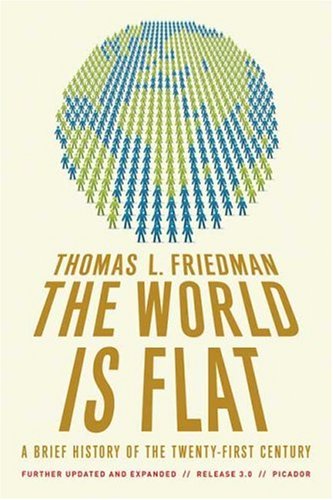
Globalization


“The world is being flattened. I didn’t start it and you can’t stop it, except at great cost to human development and your own future. But we can manage it, for better or worse.” - Thomas L. Friedman, Author of The World is Flat
Although I have not finished but merely 15 pages of this book, Global Scholars are required to finish it by the end of our sophomore year. So this term - globalization - has been very popular these days. Yet, what is the meaning of it? According to my prep course, it is "a process of interaction and integration among the people, companies, and governments of different nations, a process driven by international trade and investment and aided by information technology. This process has effects on the environment, on culture, on political systems, on economic development and prosperity, and on human physical well-being in societies around the world."
Alright, so their definition is a little better than mine! But let me go on to inform you of my personal opinion on this matter.
Sure, there are costs and benefits to globalization. But I try to focus on the benefits. Because if we focus on the costs, then we won't be progressing. If we don't move forward through the trials that come with globalization, then controversies will elevate into war/dispute and we will struggle to overcome these difficulties. Cooperation is a must for all people to benefit. For the most part, because of technology such as internet and cell phone communication, we are able to work together and advance.
I feel that most people groups are seeing the benefits of globalization and are all for it. But there are some people who are very ethnocentric. These people are only focused on their own culture and don't have the desire to progress internationally. I, too, am ethnocentric in my Christianity. I desire for others to share in the benefits of everlasting life through Jesus Christ, saving them from death and separation from God the Father. In my perspective, I see globalization as apart of God's great plan for his people. Spreading the good news of Jesus Christ is much easier now through all of the development our world has undergone. I hope you can begin to think about how supportive you are for globalization and how you can promote it within your family/culture.

Sunday, August 2, 2009

Teacher to Student Relationship in Hong Kong

According to the conversation I had with Rachel Lewis, the relationship between student and professor in HongKong is very different than what we, as Americans, are used to. Here in the states, I know that I can raise my hand and make a comment about something that a professor has said. Whether that be starting an argument, or simply asking a question is really not that big of a deal. In fact, in many class settings here it is good to have someone start conversation amongst classmates so that the learning environment is much more involving for the students.
Not so in HongKong.
I found this blog post by Jennifer Farr, an American teacher for Kindergartners in Hong Kong:
"In kindergarten, the students are three to six years old. Once they turn six they can attend primary school. Kindergarten is like boot-camp for primary school. They beat the kids into submission with listening and rule-obeying skills.
The impression I get from the Chinese teachers is that fun is an after-school activity. Because this opposes my learning philosophies, I enter Chinese classes and get the kids moving and engage them in dramatic play. The teachers look worried. It’s like I’m the phys.ed. teacher in elementary school. Phys.ed. is the one class that EVERY student likes because thinking is not a requirement. I often wonder how this strict environment effects these small children. Every class bows and chants in unison “Good Morning Miss Jenny” and the Chinese teachers are so proud. I wonder if these kids need to be making a mess with paints and getting muddy in the nearby creek. The one reason that I appreciate this serious classroom style is because it nullifies any behavioral problems. Even three year olds will obey without a complaint. And they don’t pull the normal three year old trick of pretending that they don’t hear you. It would seem that respecting authority is drilled into Chinese from the womb."-Jennifer Farr
So it seems that the same goes for college students. The Chinese culture inhibits the students to have a great deal of respect towards their teachers. So much so, that the students' role is to do no more than receive that which the teacher is giving in their lectures. Although this will be difficult for me to get used to, I admire their principles. In fact, I intend to use this as a tool for helping them understand how to have a relationship with God through following Christ's example. As Bill Fort (my pastor) said today in his sermon, "All of us in some way refer to Jesus as a great prophet or teacher in our personal relationship with him." Publicly we, as Christ followers, may proclaim him as Lord of all. However when Jesus teaches us how to give 10% of our income to him, we ignore his teaching disregarding and yes disrespecting his authority as Lord. I hope to follow their principles as a student in hopes of improving my respect towards my Savior. For I know that He has much more to show me and I am ready to receive it!

Saturday, August 1, 2009

My Socio-Economic Situation

In an earlier post I informed you guys that I will be living on campus with other exchange students. These students will be coming from all around the world - but mainly Europe. I've got a feeling that they have some stereotypical views about me as an American.
They might assume that I am wealthy. WRONG.
God has blessed this opportunity for me and my family by eliminating all major costs!
I hope to be able to explain to them that their assumption is wrong by making them aware of my family situation. My parents can't afford to pay for me to live in HongKong for a year. I can't either obviously. My dad is a minister and my mom goes to college! I don't want them to think that we are dirt poor, but I do want them to realize that we don't drive a Mercedes Benz and go to parties with Paris Hilton.
I've learned from my research on Hong Kong that the people dress well. Let me explain further: What do 75% of students at Georgetown College wear to class? SWEATPANTS AND HOODIES
As for HongKong students, they wear smart casual always. If I walk into class with a hoodie and sweatpants, I probably will get some weird looks. So, maybe one day I will proudly wear my G-town sweats and hoodie so that they can visually see that I am not rackin' the dow (that's to have a lot of money mom, dad, and all others unable to translate).

Wednesday, July 29, 2009

Cultural Etiquette

  • Request your bill by making a writing motion with your hand.
  • To beckon someone, extend your arm, palm down, and make a scratching motion with your fingers.
  • Never point with your index finger. This is used only for animals. Point with your hand open.
This will be a difficult gesture for me to get used to!
  • Tea is the customary beverage for all occasions. Your teacup will be refilled continually. Leave your cup full if you are finished.
They don't appreciate putting sugar and cream! I need my sugar and cream!
  • It is bad manners for a host not to keep a guest's plate full, and it is even worse for a guest not to continue eating as long as the plate is full. Always leave some food on your dish after you are finished with each course. Otherwise the host will continue refilling your plate or bowl.
No problem with this one! I have always left a bite or two on my plate.
  • The Chinese find belching, slurping, clanging utensils and making loud noises at the dinner table acceptable, sometimes even complimentary.
  • Wear a good watch. It will be noticed.
Gotta get me a nice rowlex!
  • Gift giving is a tradition in Hong Kong that communicates respect and friendship. Be prepared to present a small gift at the first meeting, such as high-quality cognac, brandy, candy or pens. Unlike other Asian countries, Scotch whiskey is not special in Hong Kong.
I plan on getting some Georgetown College pens to give to people. This will be my gift to those who are meeting me at the airport! BROWNIE POINTS!
  • Never go to a Chinese home without a gift.
  • The Chinese are famous for communicating by "Saying it without saying it." You will have to learn to read between the lines.

Tuesday, July 28, 2009

Their own way of doing things!


MEETING AND GREETING


.The handshake is commonly used when greeting westerners.
.The Hong Kong Chinese handshake is rather light.
.During the greeting, many Hong Kong Chinese lower their eyes as a sign of respect.
.There is no need for you to emulate this gesture, although prolonged eye contact should be avoided during the greeting.
.If you are at a large function, you may introduce yourself to other guests.
.At smaller functions, it is polite to wait for your host or hostess to introduce you.
.The Chinese traditionally have 3 names: The surname, or family name is first and is followed by two personal names. The first personal name is their father's name and the second personal name is their own name.
.Address the person by an honorific title and their surname.
.If they want to move to a first name basis, they will advise you which name to use.
.Some Chinese adopt more western names and may ask you to call them by that name.

BUSINESS ETIQUETTE AND PROTOCOL

.They are quite familiar and comfortable with people from other countries.
.The Hong Kong Chinese take a long-term view of business relationships.
.Business cards are exchanged after the initial introductions.
.Have one side of your business card translated into Chinese, with the Chinese characters printed in gold, since it is an auspicious color.
.Business cards are exchanged using both hands.
.Hand your card so the typeface faces the recipient.

I've already made my own business card, however after researching I found out I should put Chinese on the other side!All information found from kwintessential

Wednesday, July 22, 2009

Communicating with HongKongers

  • What do you think will be especially difficult for you to adjust to in your host country?
Learning Mandarin in class, yet hearing Cantonese from all over this crazy city will make communication VERY difficult for me. I pray that I will be able to quickly learn basic conversation and grammar concepts enough to jump start my ability to speak Cantonese with those I meet off campus. Of course, one of the main reasons for my exchange to Hong Kong is in fact to learn how to speak a Chinese dialect. It will be interesting because Hong Kong actually declared themselves "triliteral/bilingual". I am confident that I will be able to figure things out quickly.
  • What would you want to know about the culture in which you will be living in order to help guide your response?
How best to converse with peers, and how I should change my style of conversation with elders or officials. Should I be direct, attached, or over-expressive? Knowing this will help me begin to understand important parts of HongKong's cultural differences from my own.
  • What might be some positive aspects of being in your host country, and how might these help compensate or ease some of the difficulties?
I have always struggled in my own culture with being to honest in my speech or quick to speak. I feel that being in a class setting in HongKong shall be interesting. From what I hear, students don't raise their hand or make comments - they listen to the professor's lecture and that's it. However, this will be good for me because I feel that I will be able to humble myself a bit and know how it feels to just listen and not be so flippant with comments. I am sure that there will be instances where I will show my personality though and this may be good for Chinese students to experience something diverse, who knows!
  • In order to ease the transition and adapt to life overseas, you may need to make some temporary, yet fundamental concessions. What adjustments or changes are you willing to make?
I'm willing to not be so picky on what I eat. Here I really get choosy on what I want to eat for my meal. Although I am sure HongKong has a great selection, I will be in situations where I will have to stretch my taste buds. Instead of refusing, I will just have to go ahead and eat whatever is available. I'm also willing to embarass myself in order to practice speaking and learning how to live as they do.
  • What personal qualities do you think are important for adjusting to life abroad? Do you have these qualities?
Humble. Kind. Considerate. Understanding. Cautious. Aware. I feel that I have these qualities and will do my best to improve any weaker qualities that I may have as well. I definitely need to be controlled in some instances like convincing myself that I am capable to find my way around. I need to be more humble in many ways. This main characteristic will make or break how I adjust to living in HongKong.

Sunday, July 12, 2009

Prep Course 1: Key Recognitions

Anticipation and Expectation Exercise

A. What are the five things that I am most looking forward to about studying abroad?

  1. Exploring a whole new cultural environment
  2. Learning and speaking Mandarin and Cantonese
  3. Meeting new people on campus and off campus
  4. Getting involved with basketball and tennis and Kowloon International Baptist Church
  5. Gaining so much experience and having a credible global perspective

B. What are the five things that currently worry me most about going overseas?

  1. Finances - not having a job and being on a limited budget
  2. Not having an accountability partner to help encourage me in my walk with Christ
  3. Knowing that my family is probably worried about me
  4. Struggling to make good grades in class
  5. Being persecuted for my faith as a Christian

C. What are the five things (people, places, activities, etc.) I believe I will miss most from home when abroad?

  1. Family and friends
  2. Georgetown College
  3. Fudge (my dog)
  4. Food selection
  5. Having a comfortable home

D. What are the five things (people, places, activities, etc.) I believe I will miss least from home when abroad?

  1. Working full time
  2. Paying for gas
  3. Telling people about my study abroad plans!
  4. The English language
  5. Going through the motions

E. My greatest single challenge overseas will be: patience and perseverance